Experience. Knowledge. Heart.
Enjoy some of my best and most recent articles.
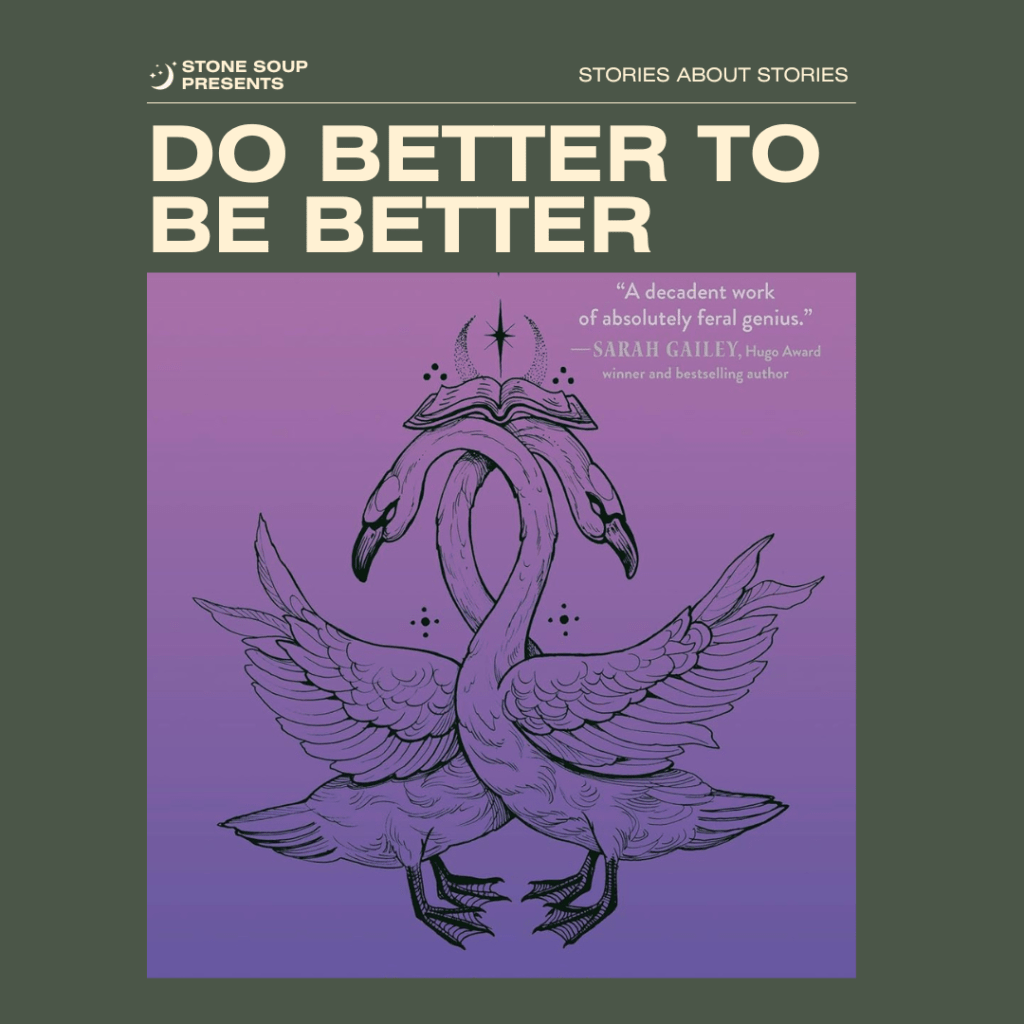
Do Better to Be Better: The Feast Makers by August Clarke: Stories About Stories
Over on Stone Soup, Sarah Gailey’s doing a “Stories About Stories” column and this month is our Erewhon group interview for H. A Clarke’s The Feast Makers, the wrap-up to their Scapegracers trilogy! 📚 💖 🌈
I love this series because it shows how much a book is a real production and team effort. None of us collaborated on our answers but you can tell we were all vibing on the same page. Sharing to highlight the work from the author August Clarke, but also the joy from our Production team Cassandra Farrin and Leah Marsh, Marty Cahill our marketing manager, Anka Lavriv the cover artist, and my editorial colleague Viengsamai Fetters.
I think each of us had happy tears in our eyes while writing our answers. I’m so proud to work alongside them.

Working with Your Career’s “Track Changes”: Advice from One BIPOC Editor
This essay is the third of eight in the Publishing Taught Me: A SFWA Anthology Project.
The role of an editor in book publishing is shrouded in mystery. Perhaps it’s because our job faces dualistic scrutiny by writers. Editors are creative guides but also gatekeepers preventing you from getting published. Editors wield brilliant insights that strengthen the story, and they fight all of your artistic choices. Editors are your biggest advocates inside the publishing house, and they are blamed if a book flops financially or critically for failing to do their job. Faced with these (mis)perceptions, what is an editor’s job? My personal answer: editors are dedicated readers, chosen collaborators, imaginative improvisers, and keen business partners.
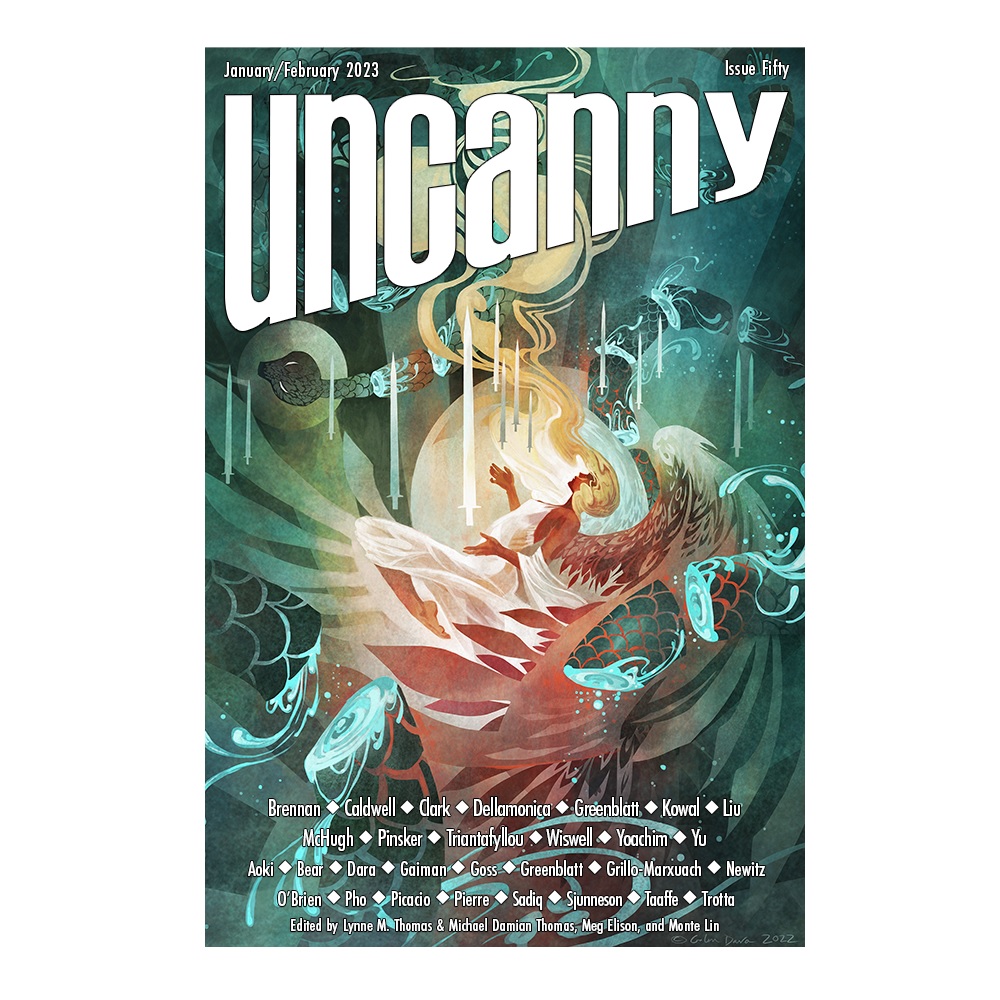
The Ear, the Eye, and the Arm: Audio Writing for Uncanny Magazine: Issue 50, Jan/Feb 2023
Audio drama in particular has been my nut to crack while working in podcasts as a story producer. I’ve had writers of all backgrounds ask: how can I break into audio? Before working as an editor, I grew up as a drama club nerd and got a degree in performance studies. Yet writing for audio drama was still an evolving medium. Figuring out how to translate from the page to the .wav (or .mp3) has made me rethink a lot about the norms I had worked within the book space.
Audio drama is a form of theater, but not exactly the same as interpreting work onstage. Reading a play on-air or recording a stage performance is a type of audio fiction, but the outcome isn’t the same as drama written specifically for the medium. Most stage performances are written from a visual perspective. Likewise, audio drama also isn’t 100% the same as an audiobook or reading a story aloud. Prose stories are written with a perspective in mind: getting into the “shoes of a character.” Perhaps, the best way to figure out what makes a good audio drama is drawing the connections between the ear (sound, narrative’s external focus), the eye (visuals, clarity of setting and characters), and the arm (actions, clarity of scene movement).
The Difference Between Young Adult and Middle Grade: A Primer
Middle grade books are for readers who are 8 to 12 years old, and young adult fiction is for older kids (although many adults enjoy these books too). The writing is more complex in young adult books, but these books also address different themes and questions for their readers.
Improve Your Storytelling with Playwriting Techniques
Using a structure with acts and scenes, paying attention to blocking, and keeping dialogue goal-oriented and lively are all lessons novelists can learn from playwrights.
What Are the Different Book Genres?
Writers often struggle with how exactly to describe their stories to other people. They may get asked, “What genre is your book?” and they get stumped trying to give a pithy answer to encompass an entire universe and cast of characters they had built up in their imaginations! Stories come in many different flavors, and some of those flavors are called genres.

Representation in Fiction: How to Write Characters Whose Experiences Are Outside of Your Own
As publishing endeavors to address inclusion and diverse representation in fiction, an inevitable question arises: Can authors write characters whose experience is outside of their own?

ConCrit in Comments Only: What Writing Fanfiction Taught Me as an Editor
Writing skills don’t always have to come from an MFA or out of how-to books. Sometimes they can be gathered together from the most unexpected places.
Here’s what this editor learned from writing fanfiction.

Leftist Constructs: The radicalism of steampunk
Steampunks tend not to idealise the past, despite being fascinated by this conflicted history. Just as cyberpunk – the sci-fi term that inspired Jeter’s ‘steampunk’ – involved conflict with shady multinational corporations and the authoritative state in a techno-infused future, today’s steampunk community flips the bird at Victorian norms, dismantling history and exposing it as the construct that it is. In steampunk, colonised nations overthrow empires, mechanical innovation ends slavery or child labour, women don corsets on the outside of their dresses and become adventurers independent of men.

The Ao Dai and I: A Personal Essay on Cultural Identity and Steampunk
Steampunk can be more than simple cultural nostalgia about the way things were or a rebellion against the past (which, unless we really are time travelers, is nothing more than an intellectual exercise). Steampunk is ourselves today, holding the past in our hands, and asking, “How did we get here?” It can be as tangible as gears and dirt and cloth. It’s how we present ourselves, even if we come with nothing but the clothes on our backs.
Check out my Bibliography for a complete listing of my writing and academic credits.
 Diana M. Pho